
A truly comfortable home should do more than simply “hold everything.” It should feel visually calm, remain convenient to use, and continue to stay organized even after years of everyday living.
In whole-home customization, storage can generally be divided into two main types: open storage and closed storage.
Open storage keeps selected belongings visible, adding openness, depth, and a sense of everyday life to the interior. Closed storage, by contrast, conceals visual clutter behind cabinetry, allowing the space to retain a cleaner and more orderly appearance.
So, how should open and closed storage be combined?
There is no universal percentage that works for every home. The ideal balance should be determined by the function of each space, the number of household members, the types of belongings being stored, and, most importantly, the way the residents actually live.
.jpeg)

A common misconception about storage is that the more things are hidden away, the tidier a home will appear.
While an entirely closed cabinetry system can certainly create a clean visual effect, too much enclosure can also make an interior feel flat, rigid, and lacking in character.
At the other extreme, excessive open storage can quickly become visually overwhelming. When books, decorative objects, household items, and everyday essentials are all exposed at once, the space can easily feel cluttered.
Sophisticated storage design is therefore not simply about adding or removing cabinets. It is about creating a deliberate balance between what should be seen and what should remain concealed.
Open storage is responsible for display and convenient access.
Closed storage is responsible for concealment and organization.
The two are not competing solutions. They perform different roles within the same integrated storage system.
Open storage is best suited to objects that deserve to be displayed, need to be accessed frequently, or help express the lifestyle and personality of the residents.
Books, collections, decorative objects, artwork, and selected everyday items are all suitable candidates.
In the living room, open shelving, display cabinetry, or recessed niches can be used to create visual focal points.
In the dining area, coffee equipment, glassware, barware, or thoughtfully designed household objects can become part of the interior composition.
In the bedroom, small sections of open cabinetry can provide convenient access to frequently used items.
The purpose of open storage is not simply to “put things on display.”
Rather, it introduces breathing space into the cabinetry system and allows the interests, aesthetics, and traces of daily life of the residents to become naturally integrated into the home.
Good open storage does not display everything, it displays only what is worth being seen.
Compared with open storage, closed cabinetry is more effective at accommodating the large quantity of fragmented objects found in everyday household life.
Clothing, cleaning products, miscellaneous household items, spare supplies, seasonal objects, and belongings that do not need to remain visible are generally better stored behind cabinet doors.
For contemporary households in particular, the amount of personal belongings tends to increase over time. Sufficient and properly planned closed storage therefore becomes an essential foundation for maintaining long-term visual order.
Through full-height wall cabinetry, wardrobes, sideboards, entryway cabinets, media walls, and other integrated storage systems, the requirements of different areas can be planned as part of one coherent whole.
Once the cabinet doors are closed, fragmented objects disappear from view, allowing walls and cabinetry to form a cleaner and more continuous architectural composition.
This is one of the fundamental values of whole-home customization: not simply adding more cabinets, but allowing storage to become part of the architecture itself.
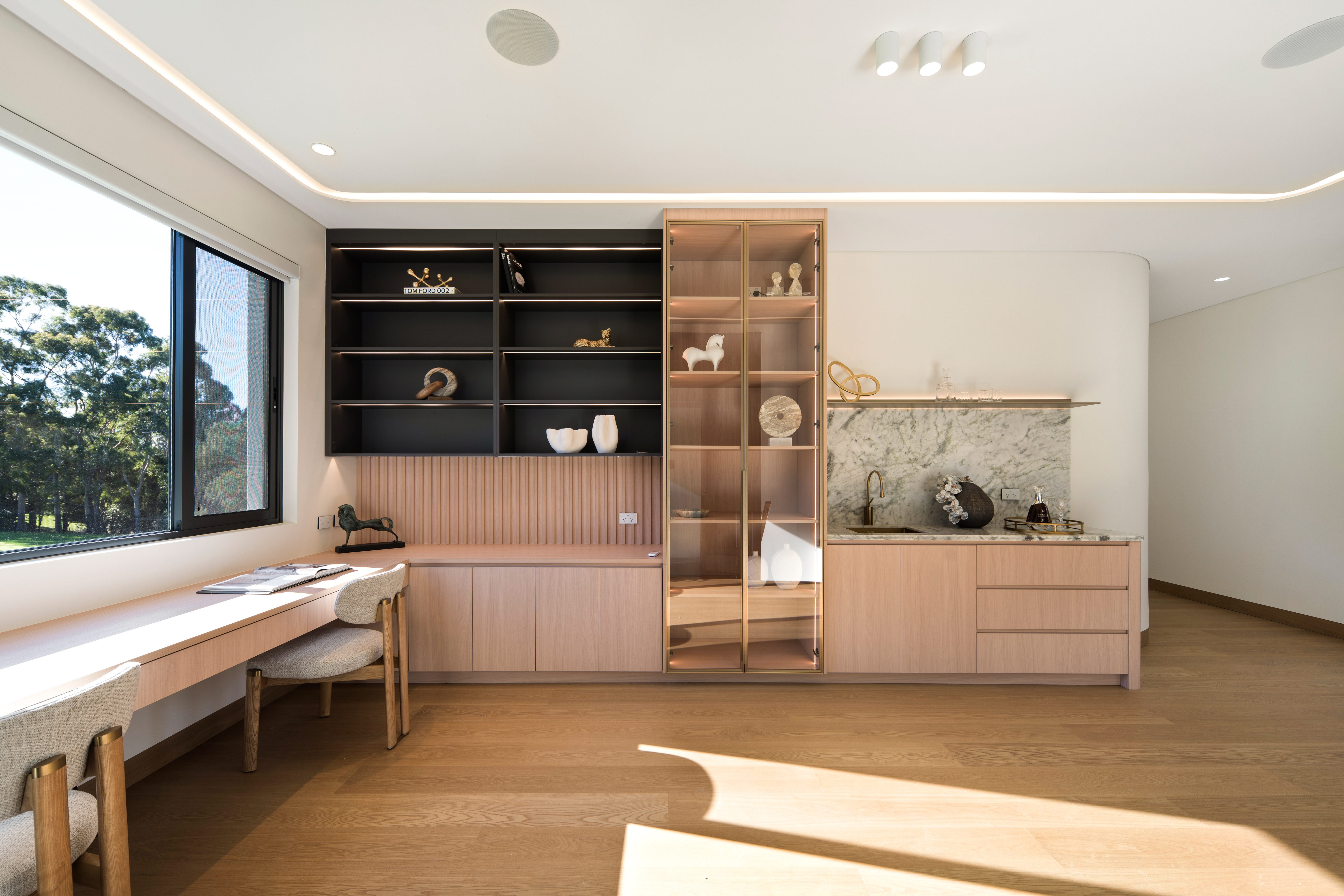
There is no fixed open-to-closed storage ratio that applies to every residence.
A more effective approach is to adjust the balance according to the function of each space.
Rather than beginning with a predetermined percentage, it is more useful to ask three questions:
1. What should be displayed?
2. What needs to be accessed frequently?
3. What should remain hidden?
Household items can then be classified according to these three criteria.
Objects with decorative value, collectible significance, or the ability to express a particular lifestyle can be placed in open storage or display zones.
Frequently used objects should be positioned within easy reach and may be combined with open shelving or partially open cabinetry.
Items that are numerous, visually fragmented, or likely to create clutter are better placed in closed storage.
A storage system developed around these principles is generally more practical than one based on a rigid numerical ratio.
The living room is typically one of the primary communal spaces in a home, which makes visual order particularly important.
Media cabinetry and storage walls can therefore be designed primarily with closed cabinet fronts, while selected open shelves or glass display cabinets are introduced as accents.
Suitable display items may include:
• Art objects
• Books
• Collectibles
• Decorative accessories
This combination maintains a clean overall appearance while introducing depth, character, and a sense of lived-in refinement.
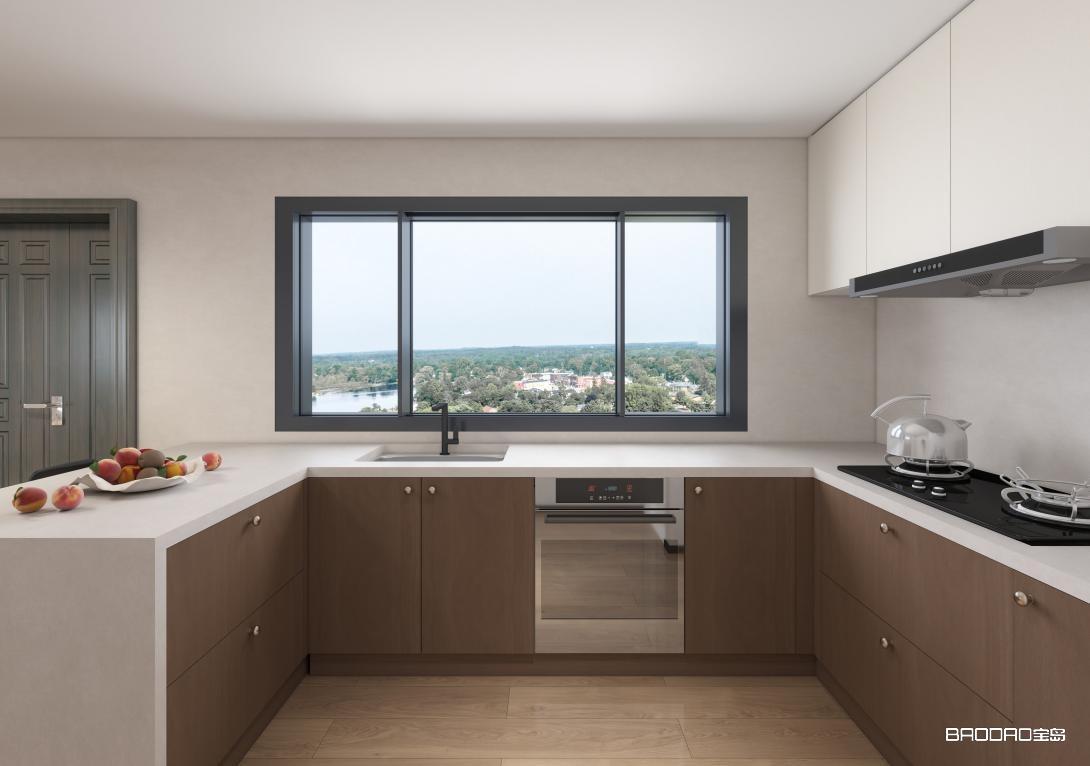
The kitchen contains a high concentration of utensils, appliances, ingredients, and other functional objects. Closed storage should therefore usually account for the majority of the cabinetry.
Cookware, tableware, small appliances, and pantry items can be concealed within integrated cabinets, while coffee stations, beverage areas, wine displays, or selected frequently used items may be incorporated into open shelving.
In a contemporary kitchen, the combination of concealed storage and carefully controlled display can create a more effective balance between functionality and aesthetics.
The walk-in wardrobe is one of the areas where the balance between open and closed storage can vary most significantly from one household to another.
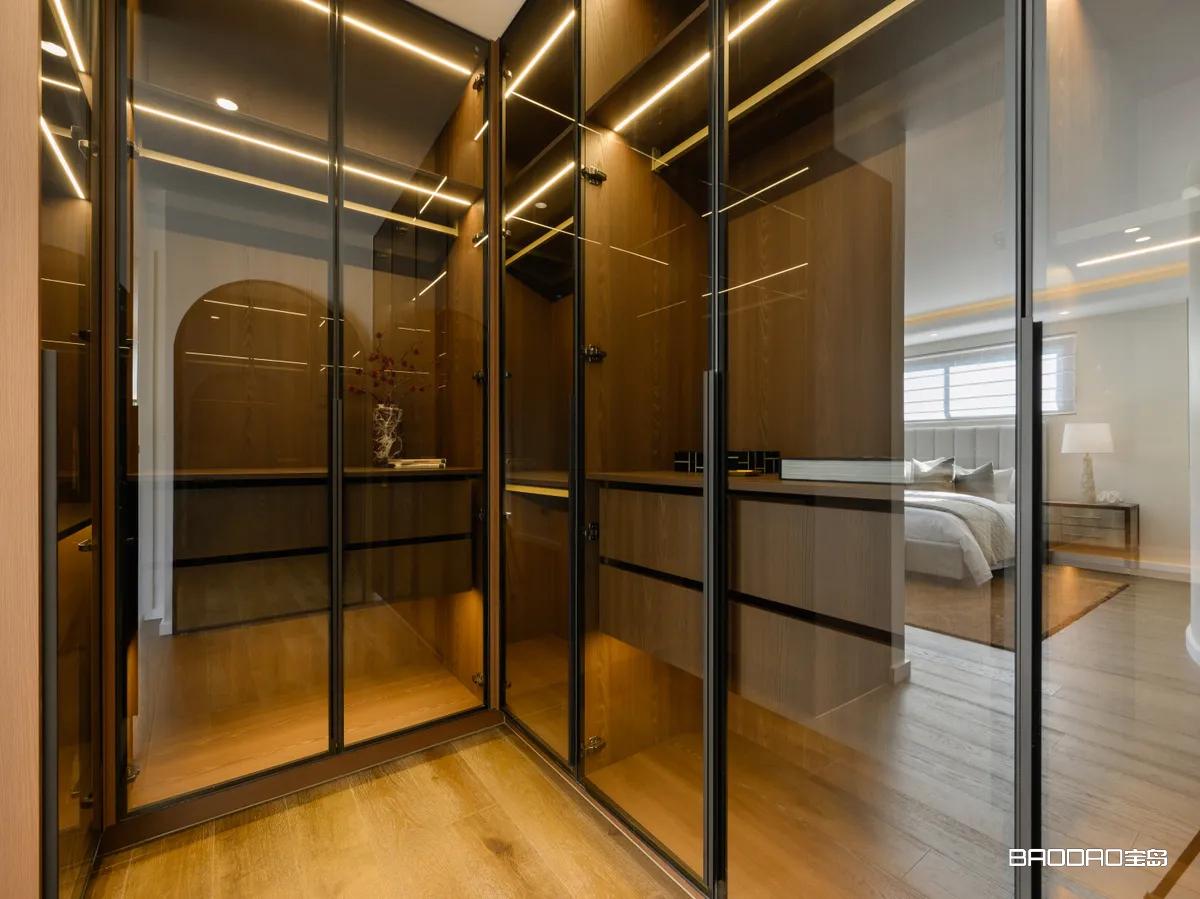
If clothing, handbags, shoes, and accessories are intended to contribute to the visual character of the space, glass-fronted cabinets and open display zones can be introduced.
Seasonal clothing, undergarments, and less frequently used items, however, are generally better suited to closed storage.
At Baodao Home, walk-in wardrobe systems are planned according to the clothing categories, usage habits, and spatial dimensions of each household. Hanging zones, drawers, open shelving, and display cabinetry are configured as an integrated system so that storage genuinely supports the rhythms of everyday life.
Bathrooms are exposed to relatively high levels of moisture, which means excessive open storage is generally undesirable.
Daily toiletries, cleaning products, and other household essentials can be concealed within closed cabinetry, while a limited number of open shelves may be reserved for frequently used items or towels.
Controlling the amount of exposed storage also helps reduce dust accumulation and ongoing cleaning requirements.
Glass-fronted display cabinetry has become increasingly common in contemporary high-end residences.
It offers an alternative between completely open shelving and fully enclosed cabinetry.
Unlike open shelves, glass-fronted cabinets provide a degree of protection from dust. At the same time, unlike solid cabinet doors, they preserve visual connection with the objects inside.
This makes it possible to achieve three functions simultaneously: Display + Protection + Visual Transparency
Across a range of Baodao Home whole-home customization projects, glass display cabinetry is combined with timber finishes, PET cabinet fronts, and concealed lighting systems in living rooms, kitchens, walk-in wardrobes, and other spaces.
When integrated lighting is added, handbags, wine collections, accessories, decorative objects, and collectibles can become part of the spatial composition rather than simply items placed inside a cabinet.
Exceptional whole-home customization should not begin with the question:
“How many cabinets can we fit here?”
It should begin with an understanding of how the residents live.
Before the design process starts, several questions should be considered:
• How many people live in the home?
• Which items are used every day?
• Which belongings deserve to be displayed?
• Which items should remain concealed?
• What are the household’s existing storage habits?
• Are there specific collection or display requirements?
• How do humidity levels and usage frequency differ between spaces?
Only after understanding the household’s lifestyle can the appropriate balance between open and closed storage be determined.
In its whole-home customization projects, Baodao Home integrates spatial planning, material coordination, digital production, and standardized manufacturing to create a unified system across kitchens, living rooms, wardrobes, walk-in closets, bathrooms, and other functional areas.
The objective is not simply to create individual cabinets, but to establish a consistent design language throughout the home.
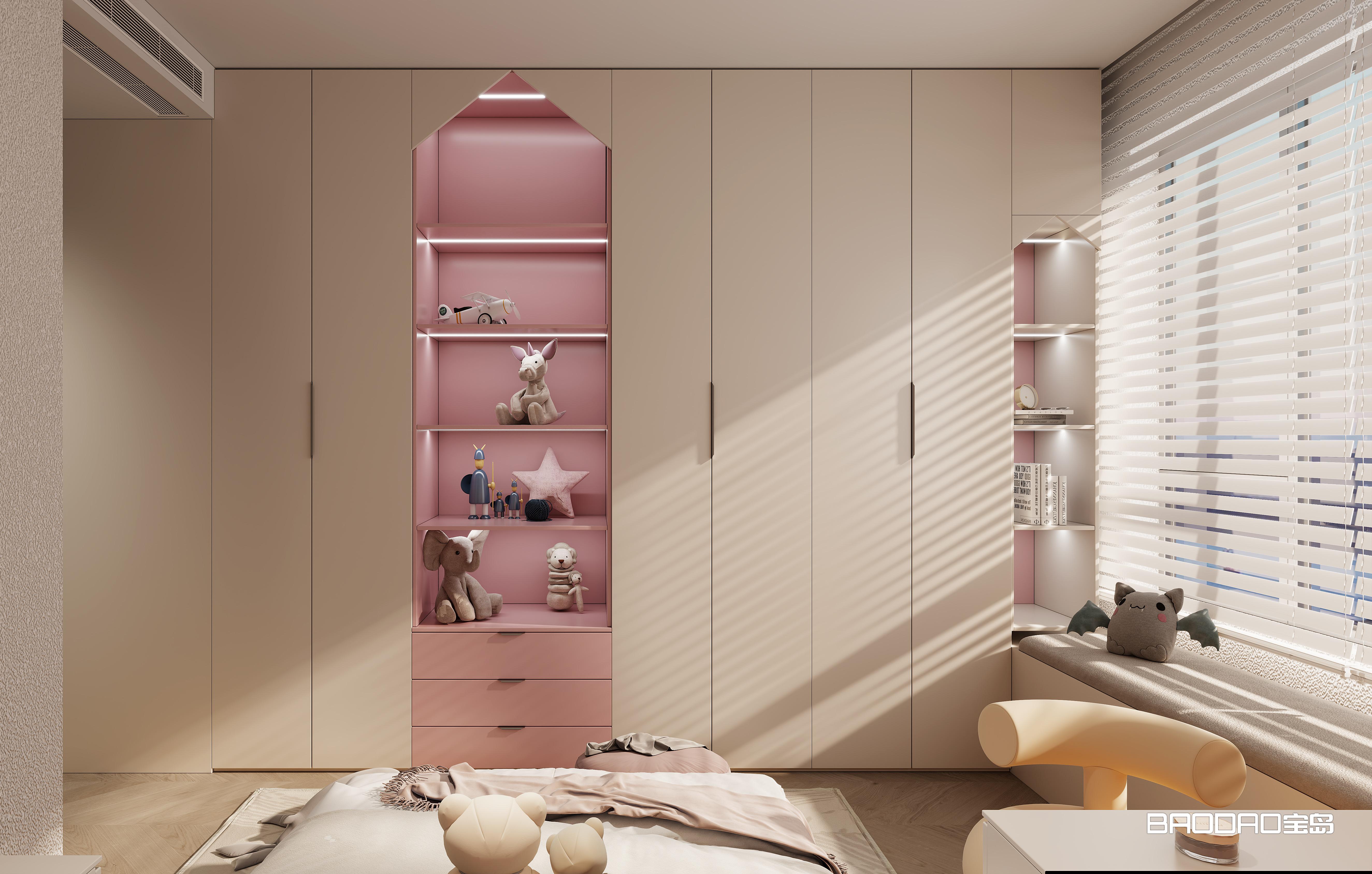
For contemporary homes, the best storage strategy is never simply “more open” or “more closed.”
Open storage allows life to be seen. Closed storage maintains visual order.
Glass display cabinetry creates a more refined balance between the two.
Truly sophisticated whole-home customization lies in allocating each type of storage according to the household members, spatial functions, belongings, and everyday habits of the residents.
At Baodao Home, we believe that the value of whole-home customization goes far beyond increasing storage capacity. Its deeper purpose is to use systematic design to establish a coherent relationship between cabinetry, materials, lighting, and architecture.
When every object has an appropriate place, and every area has a clearly defined function, storage is no longer simply about “putting things away.” It becomes an integral part of the order, functionality, and visual language of the contemporary home.
Block Quote