
Baodao Home provided a comprehensive one-stop service covering spatial detailing, material systems, custom cabinetry, manufacturing, and final installation. Centered around the core concepts of “hidden functionality, visual integration, and lifestyle-oriented spatial planning,” the project systematically redefines the residential experience within an Australian living context through a more internationally inspired contemporary aesthetic.
I. Spatial Planning | Balancing Functional Order and Lifestyle Scenarios
The overall spatial layout adopts a combination of open-plan and modular design principles. Through integrated cabinetry systems, natural transitions are created between different functional zones, allowing the home to maintain visual continuity while ensuring privacy and practical efficiency.
1. Entryway & Transitional Spaces | Softening Traditional Boundaries
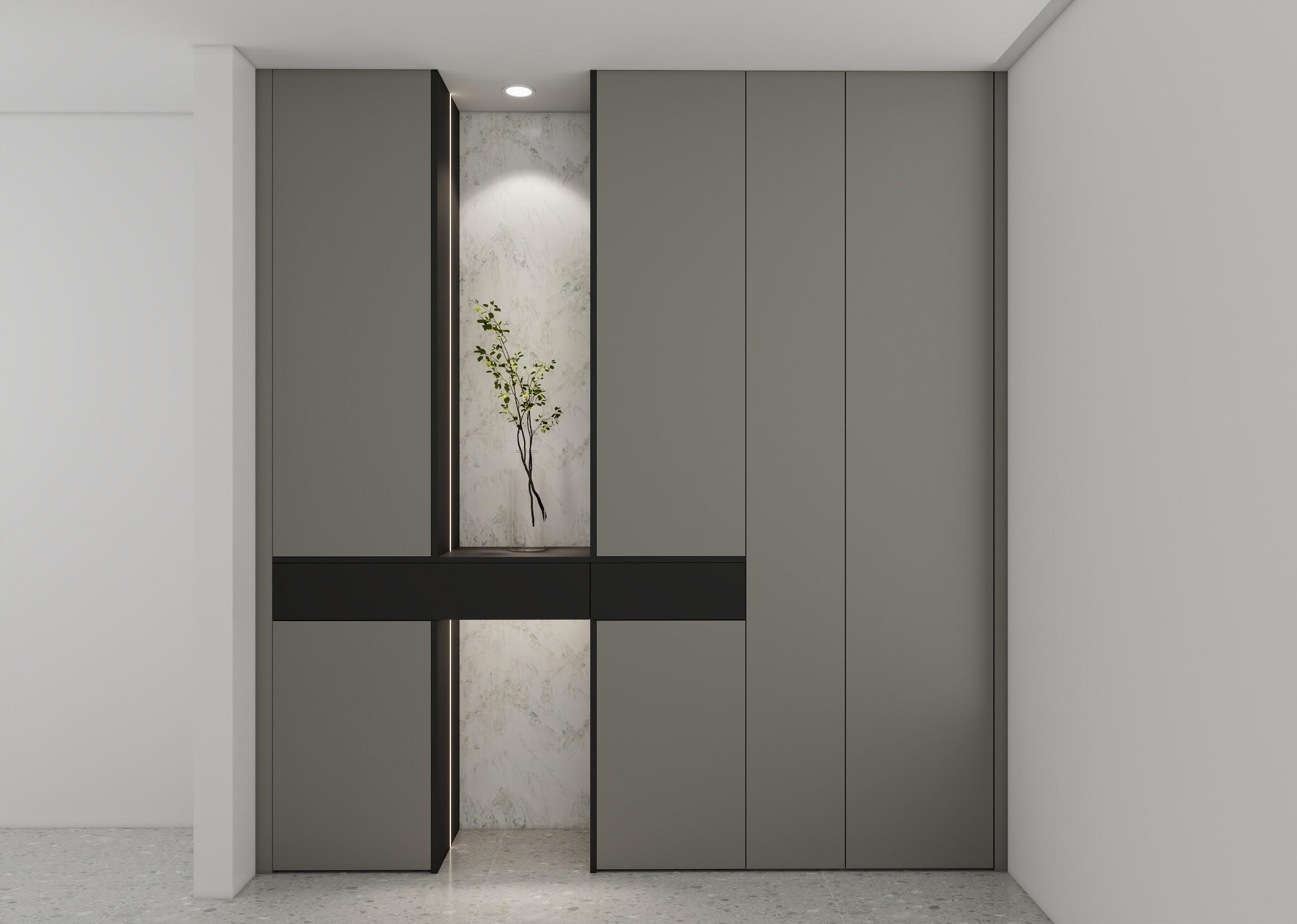
The entrance area features a floating shoe cabinet paired with an integrated storage system, complemented by sintered stone surfaces and concealed lighting to create a lightweight yet ceremonial arrival experience.
The design focuses on reducing visual heaviness through:
• Floating cabinetry structures that visually release floor space
• Low-saturation layering between deep grey and warm grey tones
• A balance between open niches and enclosed storage systems
• Lighting integrated within cabinetry structures to enhance spatial depth
The corridor area incorporates continuous low cabinetry and window-side seating, transforming a conventional passageway into a multifunctional transition space suitable for reading, resting, and everyday living.
2. Bedroom Systems | Integrated Storage Within Minimalist Order
Each bedroom adopts an architectural cabinetry approach, integrating wardrobes, bedside elements, desks, and vanity functions into a cohesive spatial system.
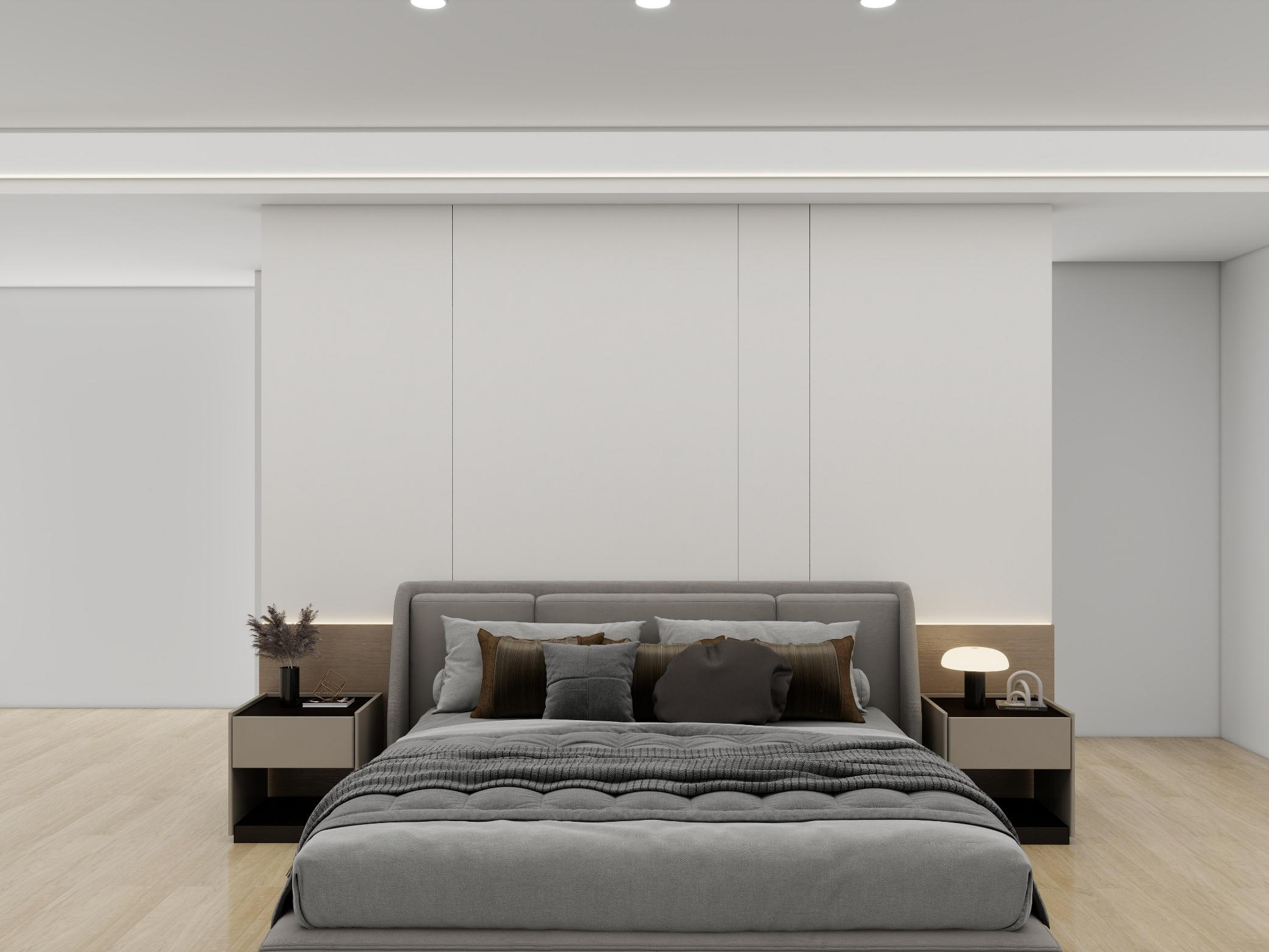
The master bedroom is defined by a clean white palette, where concealed cabinet doors and handle-free structures create uninterrupted elevations. Linear lighting behind the headboard softens the coolness of large white surfaces, resulting in a calm and refined atmosphere.
The overall design emphasizes:
• Unified cabinet proportions
• Concealed lighting systems
• Integration between furniture and architectural surfaces
• A purified aesthetic achieved through minimal decoration
Secondary bedrooms introduce warm wood veneers combined with dark open structures. Floating desks, open shelving, and integrated lighting systems create layered visual depth throughout the space.
Cabinetry design highlights include:
• Built-in storage integration
• Balanced proportions between open and closed storage
• Seamless integration of cabinetry and desk structures
• Enhanced wood textures through lighting applications
The incorporation of floating elements further lightens the spatial experience while avoiding the heaviness commonly associated with traditional cabinetry.
3. Walk-in Robe Systems | Balancing Display and Practicality
The WIR (Walk-in Robe) areas continue the project’s minimalist language, combining glass, wood veneer, and integrated lighting to create a refined boutique-style dressing experience.
Key design features include:
• The combination of glass display cabinets and concealed storage systems
• Embedded lighting to enhance visual presentation
• Modular internal cabinet zoning
• Contrasting light and dark materials to enrich spatial layering
Selected open display areas are illuminated with focused lighting, allowing handbags, garments, and accessories to function as curated display elements while elevating the sophistication of the space.
4. Study Area | A Multifunctional Lifestyle Space
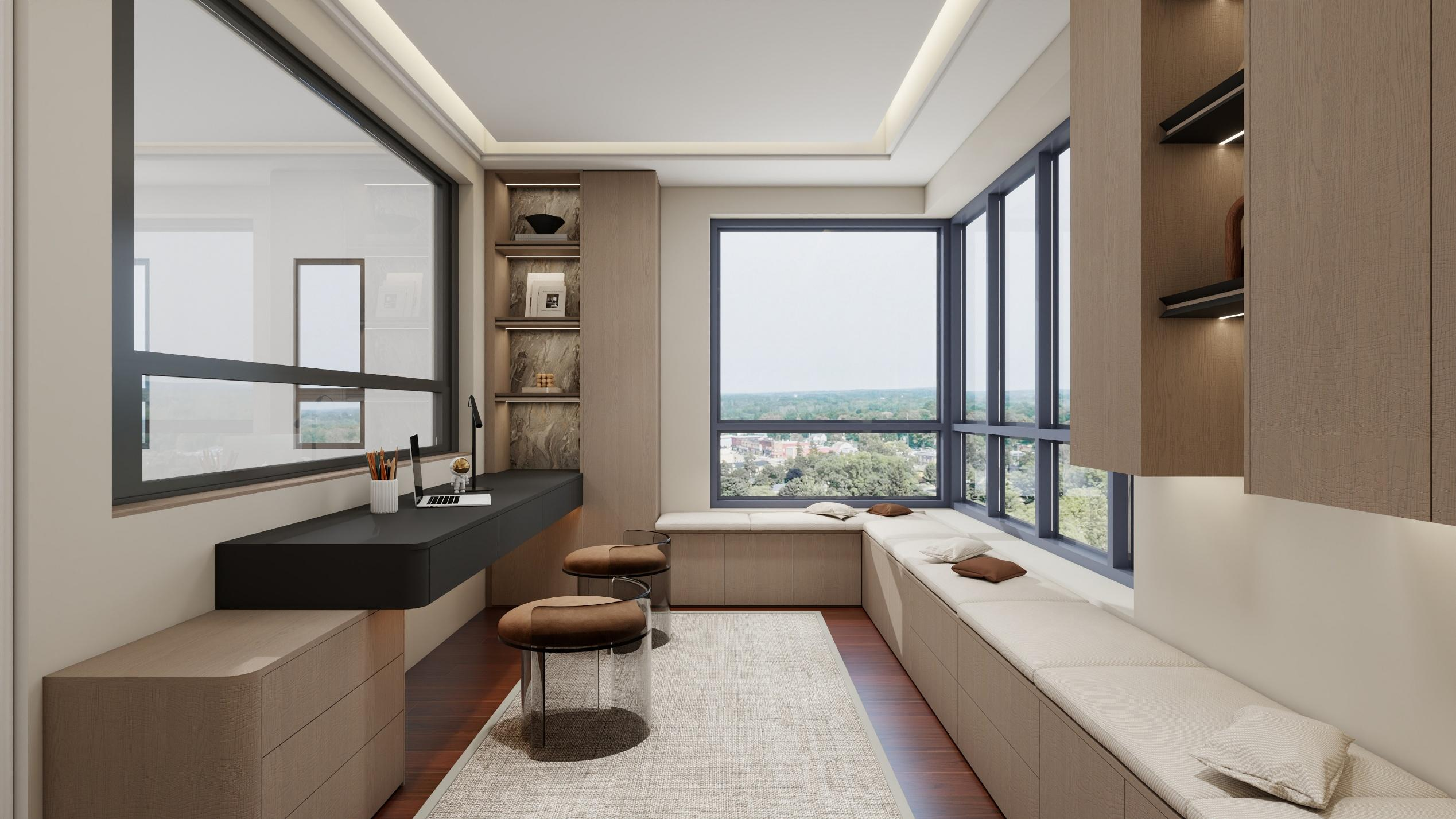
The study area takes advantage of panoramic window views to create a multifunctional environment for reading, working, and relaxation.
A built-in window bench with integrated storage drawers enhances both functionality and spatial continuity. The floating desk and open shelving systems form a cohesive architectural composition, maintaining a clean and visually lightweight appearance.
Combined with abundant natural daylight and warm wood finishes, the study achieves a quiet, comfortable, and highly livable atmosphere.
II. Material System | Restrained Yet Sophisticated Contemporary Expression
The material palette follows the principle of “less is more,” using variations in texture and light to create rich spatial layering.
Wood Veneer System
Warm wood veneer serves as the project’s primary material element, balancing the rationality of modern minimalist spaces with a softer and more welcoming atmosphere.
Wood veneer applications include:
• Wardrobe systems
• Window seating
• Desk structures
• Open display shelving
Enhanced by integrated lighting, the natural grain and texture of the wood are expressed with greater depth and refinement.
Sintered Stone & Glass Systems
Sintered stone finishes are applied throughout the entry and display areas to strengthen spatial texture and vertical visual impact. Glass cabinet doors improve openness and visual lightness within the space.
The combination of dark-toned glass and warm wood introduces material contrast and enriches the minimalist environment with additional depth.
Lighting System
The project extensively utilizes concealed linear lighting systems, including:
• Integrated cabinet lighting
• Indirect ceiling cove lighting
• Accent lighting for open shelving
• Underside lighting for floating structures
Lighting functions not merely as illumination, but as an essential component in shaping the overall spatial atmosphere.
.png)
III. Craftsmanship Details | Precision Behind Minimalism
The essence of high-end custom interiors lies not only in design, but also in execution precision.
Integrated Handle-Free System
All cabinetry adopts concealed opening systems, utilizing shadow gaps, angled pulls, and recessed structures to achieve a “de-hardware” visual effect while maintaining clean and unified elevations.
Floating Structure Engineering
Floating cabinets, suspended desks, and platform structures are reinforced with internal steel support systems, ensuring structural stability while maintaining visual lightness.
Seamless Joint Technology
High-precision finishing techniques are applied between cabinetry, walls, and countertops to minimize visible joints and strengthen overall spatial continuity.
Concealed Lighting Integration
All lighting strips are pre-installed within cabinetry structures, preventing exposed fixtures from interrupting the minimalist aesthetic while improving lighting uniformity and spatial refinement.
IV. Project Delivery | An International End-to-End Execution System
From early-stage design development and material confirmation to manufacturing at Baodao Home’s Foshan production base, international logistics, and on-site installation in Melbourne, the entire project strictly followed Baodao Home’s standardized delivery system.
All cabinetry underwent pre-assembly testing before shipment to ensure installation accuracy overseas. Supported by professional international packaging and transportation systems, the project achieved safe and efficient delivery, with the final result highly consistent with the original design vision.
In the Mont Albert project, Baodao Home moves beyond traditional cabinetry customization to rethink the relationship between people and living spaces through integrated spatial systems.
From the entryway to the bedrooms, from the walk-in robes to the study area, every functional scenario achieves a balance between minimalist order and residential warmth. Through restrained material expression, precise craftsmanship, and an international delivery framework, the project ultimately presents an ideal residence that combines modern aesthetics, practical functionality, and long-term living value.More than simply a completed home, it is a complete expression of a contemporary lifestyle.

Block Quote